SavingThePlants.com: A Practical Guide to Plant Care
Everyone who has had an opportunity to enter a website address via the search engine’s field knows the difference it may make in the results. We use the whole web address sometimes or just a name, and the use of the autocomplete option and copy-paste leaves us with a little bit messy address, and SavingThePlants.com is no different. You can see it mentioned as savingtheplantscom, as an https address, with a slash added, or even with the classic www. prefix.
However, the way you got there is that all these variations lead to the very same website. A website that helps plant owners maintain their indoor and outdoor plants in proper condition. This article will discuss what kind of resource it is, what makes plant care data so important, and how such a specialized website can actually help in caring for your plants.
What Is Savingtheplants .com?
Savingtheplants.com can be regarded as a source of information designed to assist the owners of plants in getting acquainted with the basics of caring for their plants, understanding their needs, solving various problems, and ensuring proper care. Such a website provides visitors with information that is going to be helpful in understanding how to care for plants in terms of watering, lighting, soil, fertilization, pests, and plant care in general. Visitors will be able to get some useful information that will enable them to solve their problems and find solutions without using random tips.
The most significant aspect of using such a plant care website as savingtheplants.com is the fact that it provides useful information about the basics of gardening to help people understand how to care for their plants. Readers will be able to use this type of information in case of symptoms such as wilting, yellowing leaves, brown spots, etc. Getting familiar with the basic requirements of plants is going to make life much easier for their owners.
Savingtheplantscom
Users rarely use punctuation when searching casually. For example, users do not put dots or slashes to separate words to form URLs while writing savingtheplantscom, all as one word. It does not mean that a user looking at a sick houseplant in the evening considers correct URL formatting but wants quick help. Moreover, this particular user behavior helps to understand the features that a website providing information about how to take care of plants should have.
When users type savingtheplantscom, they want to get useful and clear information quickly. They do not need any jargon and long articles before reaching the information itself. Usually, resources that pay attention to this user behavior use categorization and classification of articles according to plant types and problems. It is really useful for users because they do not need to look for necessary information among long articles.
WWW. Savingtheplants .com
The www format harks back to the earlier, more traditional era of website addresses, and plenty of people still default to typing it this way sometimes, with extra spaces added around the dots, as shown here, likely due to typing habits or formatting quirks when the address is shared.
Notwithstanding the type of spacing, it is evident that this is talking about the primary website, which hosts information regarding plant care. Well-built websites are typically structured such that the www and non-www savingtheplants .com formats will always lead you to the same site. In other words, there will always be automatic redirection from the former to the latter, regardless of which form you use to access the website.
Why Reliable Plant Care Information Matters?
But before going any further, it might just be worth considering why a plant care book is necessary in the first place. Plants tend to be bought on impulse, either because you have picked up a pretty succulent from the grocery store shelves, or you were gifted a fern by your friend, or you bought a tomato plant at a market stall over the weekend. And the rush you get from buying a new plant will soon wear off if it shows signs of stress.
In the absence of any proper direction, the plant owner may easily encounter the following pitfalls:
Over-watering:
Overwatering the plant can deprive it of oxygen and will likely affect the roots in one way or another. Beginners tend to water plants too much since they believe that the more water they provide to the plant, the more it will thrive. The watering frequency is determined by a number of variables, such as the type of plant, the soil used, the type of pot, and the environment as well.
Improper light levels:
Every plant has particular light requirements, and when one puts a plant in an unsuitable location, it is guaranteed that it will affect its growth. A plant that requires little light will burn when subjected to full sunlight, while the one requiring a lot of light will remain weak if placed in a dark location.
Ignoring early pest infestations:
Pests can be identified based on their initial signs, such as the appearance of small bugs, sticky leaves, webs, and spots on the leaves. Observing the leaves and stems of the plant will assist in pest identification.
Usage of inadequate soil or poor drainage:
Soils that have excess water in them will keep the roots of the plants wet. This makes them prone to root rot. Using a good type of soil and a good pot for proper drainage of water is recommended. Drainage becomes more significant for those plants that prefer dry soil conditions.
Unsteady care routines:
Plants do well under consistent care, not under unsteady care and neglect. Unstable care involves giving an inconsistent water supply, nutrients, or altering the growth environment of the plant.
The well-organized website on plant care will come in handy for such problems since it simplifies complicated information about plant biology.
What a Good Plant Care Website Should Offer?
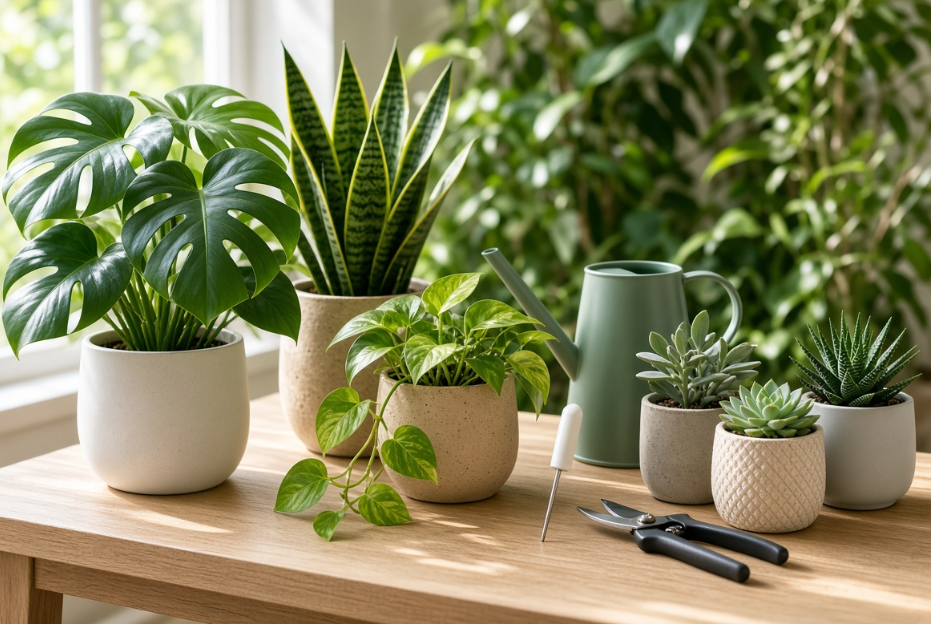
Not all plant care resources are created equal. What makes a truly helpful website differs from that of an ordinary one:
- Proper Organization of Topics: Topics should be arranged properly under various categories, including indoor plants, gardening, pests, plant diseases, and seasonal advice, to enable users to find relevant content without going through irrelevant ones.
- Specific, Practical Tips: General tips like water sometimes don’t provide any help. Practical guidelines would consist of more detailed tips on watering frequency per season, light requirements, humidity, and signs of over- and under-watering.
- Language Simplicity for Novices: Considering the audience consists mostly of novices in plant care, the language needs to be made easier for beginners without losing its informative aspect for the more advanced users.
- Up-to-date Information: Recommendations regarding plant care practices and product reviews change. This means that current websites offer more reliable information compared to the ones that were last updated many years ago.
- Means to Ask Questions: Comment sections, forms, or other communication methods let you ask questions about plants that may be hard to address in an article.
Should You Use SavingThePlants.com for Plant Information
This is the question most visitors want answered before committing time to any gardening website: is it actually worth using? Here’s a breakdown of factors to consider:
1. Ease of Navigation
An ideal plant care site will be easy to navigate to ensure that it is easy for the user to reach the exact information he or she is searching for. This could either be related to a particular type of plant or any other troubleshooting information. To facilitate the navigation process on the SavingThePlants.com website, there will need to be categorization into indoor, outdoor, pest control, and disease-related plants.
2. Depth and Accuracy of Content
Plant care information has to be much more than simple tips. It has to inform the user why there may be specific plant issues, as well as provide a solution for these issues. Proper information will help the reader make informed decisions concerning irrigation, sunlight, soil quality, pest control, as well as seasonal issues. Good research will not mislead the reader in distinguishing between general information and plant-related information.
3. Beginner-Friendly
But that does not mean that everyone who uses the website is an expert in the field. Some users will visit the site for the first time and thus will require the site to use simple language. This site, which does a great job in balancing the two extremes, serves the broad audience very well.
4. Regular Updates of Content
The plant care recommendations, new products, and even knowledge about botany change constantly. The frequency of website content updates may be a nice clue about the reliability of the information provided there.
5. Communication Options
Some plant care sites move past just providing written content to offering community tools such as forums or comment sections where individuals can ask questions that apply to their particular plant needs. If there is anything like this on SavingThePlants.com, then this would be another benefit for users.
Given that SavingThePlants.com meets the above criteria a structured format, information presented in depth, information written with the beginner in mind, timely updates, and any type of community input it makes for a credible source worth bookmarking. It is always recommended, as with any web-based information, to double-check important care information, particularly where toxic or delicate plants are concerned.
Common Plant Problems Worth Researching
The owner may find out that something wrong has happened to the plants, but he or she does not understand the reason for this yet. The plants may become yellowed, have brown tips, wilt, grow slowly, or develop spots. These symptoms may occur due to many factors such as over- or under-watering, light problems, temperature problems, pest attacks, etc. It is important to understand the signs early to apply the proper treatment.
Having reliable information about plant care will help to simplify this process since it will provide information on the most common symptoms and how to deal with them. The owners will be able to identify the possible reasons for the symptoms instead of guessing what causes the trouble. It will be helpful for beginners who cannot understand the reason why their plant looks unhealthy at the moment. It may be because of over- or under-watering or pest damage.
Tips for Making the Most of Online Plant Care Resources
Plant care on the internet may prove helpful, but it is the intelligent application of the knowledge obtained that makes all the difference. Knowing your plant and your environment as well as the credibility of the resource can help you make wise decisions. When using any particular website or general plant care online, remember to:
- Identify the plant first: It is quite common that mistakes in plant care occur when the care tips for some other plant are applied to this particular plant. Identifying the plant first will enable one to give care as recommended.
- Consider the specific environment of your plant: There is always the possibility that conditions like light, humidity, temperature, and weather may influence the response of your plant to the care. This means that you can rely on general care tips you can find online but adjust them to your conditions.
- Be sure about the information you learn: Not all the information about plant care that you may find online is appropriate for your situation. When it comes to topics like toxicity of the plant, dangerous diseases, or pests, double-check crucial information from several sources.
- Maintain a straightforward log of care: The act of recording the dates when you water, feed, transplant, and do any other important care-related activities can provide you with insight into the routines of your plant. Over time, this record will show you patterns and help you recognize changes in the state of your plant’s health.
- Always start with just a few plants initially: If you want to try something new about caring for your plant, it is preferable to first implement the idea on one or two plants rather than your whole collection. This allows you to see how well it works out.
The aim of using information from the Internet for your plants’ care is not about following everything you find there religiously, but rather using it to your advantage.
Final Thoughts
No matter whether you accessed us via savingtheplants.com search results, via an entire link or just the URL part after HTTPS, or via the www format, you are in the right place. SavingThePlants.com is an online source of plant care information designed for those who own plants but need more help understanding what these plants need and how to overcome the issues related to their care.
The process of plant care does not need to be stressful once the needs of the plants are known and addressed on time. With proper instructions, plant owners can learn what to do regarding watering, light conditions, soil, insects, and other daily routine matters. What the concept boils down to is actually very simple. Healthy plants, self-assured plant owners, and losses being avoided that could have been otherwise. See more.
Frequently Asked Questions
1. Is Savingtheplants.com Free to Use?
Plant care information sites, such as this one, are often free to access. While some may have a paid newsletter or offer premium guides and affiliate links, their basic plant care education content tends to be available for free.
2. What Does / /SavingThePlants.com Mean?
/ /SavingThePlants.com is simply an incorrectly formatted version of the website address, usually caused by extra spaces or slashes when a URL is typed or copied. The intended domain is https//savingtheplants.com, so users can search for the correct domain directly to find the relevant plant care information.
3. Does Savingtheplants.com Cover Both Indoor and Outdoor Plants?
Yes, in most instances, an all-inclusive plant care website addresses all these two types of plants, including indoor varieties such as pothos and snake plants, as well as outdoor plants. The best way to be sure about what the website covers is to check the categories page on the site.
4. How Often Is the Content Updated?
Updating frequency varies from one website to another. If a particular website has been well maintained, then at certain times, it will need to be updated for the latest information to be added to it. It will be important to check the date when the website was last updated.
5. Am I allowed to ask specific questions regarding my plant?
If a website has a comment section or even a contact form through which questions can be submitted, people have the option of asking specific questions related to their own plants.
6. Is the Information Provided by Savingtheplants.com Supported by Experts?
The answer varies based on the particular website’s editorial policy. While some websites dealing with plant care issues are edited by botanists or professional gardeners, others collect general information. The need to verify significant recommendations from a secondary source will always be required.
7. Is Savingtheplants.com Good for People Who Have Never Had a Plant Before?
Of course, any good source of knowledge about plant care should be easily understandable and comprehensible even for those who are new in the world of plant cultivation.
8. How Will I Know Whether The Site Is Legal To Use?
There is a need to verify whether the site is using HTTPS, whether there is contact information, and whether there is quality information on the website. It is also wise not to put in any personal information unless I know that the website is safe.